Look, we’ve all been there. You’re watching the season finale of your favorite Shonen anime. The hero is beaten down, the villain is monologuing about despair, and the music swells. What happens next? The hero stands up. Why?
Because of 【希】.
This isn’t just a word for “hope.” This Kanji is the fuel for every “dattebayo,” every “Plus Ultra,” and every last-minute power-up in history. Today, we aren’t just learning a character; we are downloading the concept of pure, rare possibility into your brain.
Let’s geek out on 【希】.
Data Box (Quick Stats)
Here is your character sheet for this Kanji. Memorize this for your next grind session.
- JLPT Level: N3 (Intermediate – The “Mid-Boss” level)
- Onyomi (Chinese Reading): キ (KI), ケ (KE)
- Kunyomi (Japanese Reading): まれ (mare), こいねが.う (koinega.u)
- Core Meanings: Hope, Wish, Rare, Dilute (Chemistry term!)
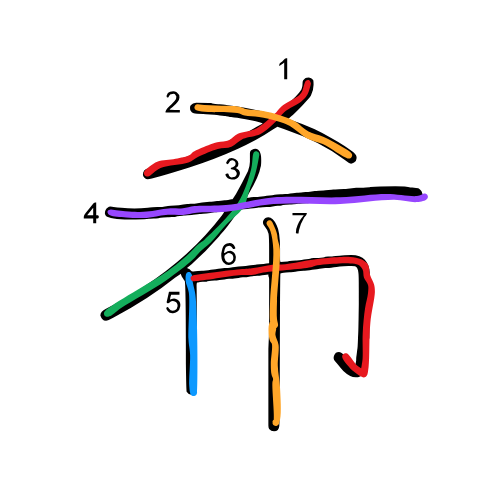
- Stroke Count: 7 Strokes
Introduction
Okay, serious question: If you could sum up the vibe of a “fresh start” in one symbol, what would it be?
For me, it’s 【希】. While other Kanji like「夢」(Dream) feel a bit sleepy or abstract, 【希】 (Ki) feels sharp. It feels rare. It feels like finding a Shiny Pokémon after 400 encounters.
This Kanji bridges the gap between “something rare” and “something you desire.” It’s the feeling of looking at a dark sky and seeing that one shooting star. That is the energy we are dealing with today.
Visual Etymology (The Origin Story)
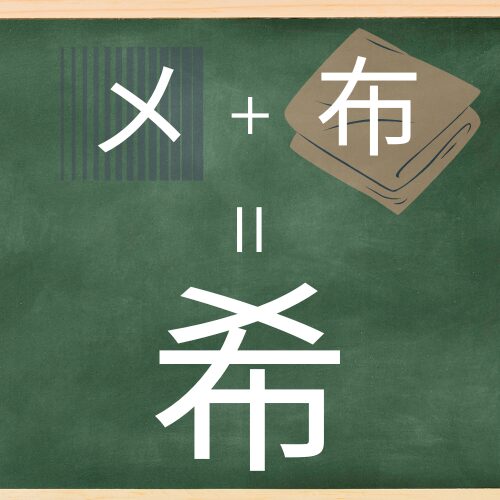
Let’s break this down like we’re analyzing a hidden easter egg in a movie.
The Kanji 【希】 is actually a combination of two things:
- Top part (乂): This represents a pattern of crossed lines, like embroidery or interwoven threads.
- Bottom part (巾): This is the radical for “Cloth” or “Towel.”
The Story:
Imagine ancient times. Linen cloth with a super intricate, crossed pattern was incredibly difficult to make. It was rare. Because it was so rare, everyone wanted it. They wished for it.
So, the meaning evolved from “Rare Cloth” ➡️ “Rare” ➡️ “Something you rare encounter, so you strongly desire it” ➡️ “HOPE.”
It literally teaches us a life lesson: Hope is precious because it is rare. Mind. Blown.
Culture & Background (The “Vibe”)
In Japan, this Kanji is an absolute superstar. It is overwhelmingly positive.
You will see it constantly in names. If you meet a Japanese girl named Nozomi or a boy named Kazuki, there is a very high chance this Kanji is hiding in their name tag. Parents use it because they want their kid’s future to be bright and full of possibilities.
But it has a dual nature!
- The Emotional Side: “Hope” and “Prayer” (Kibou – 希望).
- The Science Side: “Dilute” or “Rare” (Kishaku – 希釈).
Wait, “Dilute”? Yes! Think of “Rare Earth Metals” or “Noble Gases” (called Kigasu – 希ガス in Japanese). It implies something special that isn’t found in big chunks everywhere. It’s the diamond in the rough.
Vocabulary List
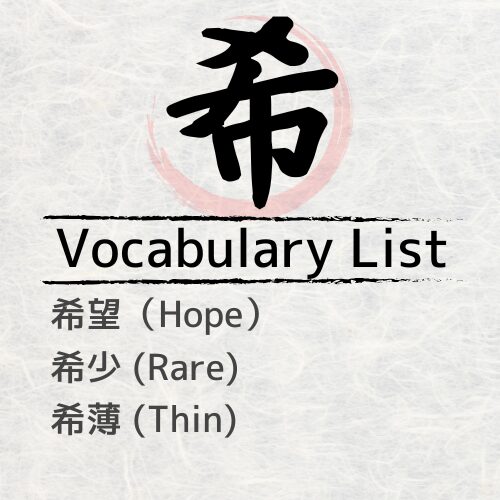
Time to expand your inventory. I’ve split these into “Survival Mode” (Essential) and “Cool Factor” (Impress your friends).
Category A: Basic & Useful (Must Know)
| Kanji | Reading (Romaji) | Meaning |
| 希望 | Kibou | Hope / Wish (The #1 word) |
| 希少 | Kishou | Scarce / Rare |
| 希薄 | Kihaku | Thin / Dilute (air or liquid) |
| 希望者 | Kibou-sha | Applicant / Volunteer |
| 希 | Mare | Rare / Uncommon |
| 希ガス | Ki-gasu | Noble Gas (Helium, Neon, etc.) |
| 古希 | Koki | 70th Birthday (A rare age in old times!) |
| 希塩酸 | Kiensan | Dilute Hydrochloric Acid (Science class vibes) |
| 希求 | Kikyuu | Strong desire / Craving |
Category B: Cool Idioms & Advanced (S-Tier)
| Kanji | Reading (Romaji) | Meaning |
| 希代 | Kidai | Uncommon / Renowned (lit: Rare in eras) |
| 希有 | Keu | Unprecedented / Rare occurrence |
| 希う | Koinega-u | To entreat / To beg / To pray (Archaic & poetic) |
| 一縷の希 | Ichiru no Nozomi | A ray of hope / A sliver of hope |
| 希望的観測 | Kibouteki Kansoku | Wishful Thinking (Logic term) |
| 希世 | Kisei | Rare in the world / Matchless |
In Anime & Manga (Otaku Time!)
Okay, put on your cosplay wigs, because this is where 【希】 shines.
1. Danganronpa: The Ultimate Hope (超高校級の希望)
If you know, you know. The entire Danganronpa series is a battle between Despair (Zetsubou – 絶望) and Hope (Kibou – 希望).
The protagonist, Naegi Makoto, isn’t the strongest or the smartest. But he earns the title “Ultimate Hope” because he refuses to give up when everyone else is crushing under the pressure. In this anime, 【希】 isn’t just a feeling; it’s a weapon. It’s a superpower that counters logic.
2. Love Live! (Tojo Nozomi)
Tojo Nozomi (東條 希). Her name is literally this Kanji!
She is the “spiritual manager” of the group μ’s. She deals with tarot cards and fate. Her name fits perfectly because she was the one wishing and hoping for the group to come together before anyone else. She represents the faith behind the idol magic.
3. Attack on Titan (The Wings of Hope?)
While the Survey Corps are the “Wings of Freedom,” the underlying theme of the entire show is the Kibou (Hope) that lies beyond the walls. Every time Eren screams about the ocean, he is channeling the aggressive, desperate side of 【希】. It shows that hope isn’t always fluffy and cute; sometimes hope is gritty and painful.
FAQ
Q1: What is the difference between 望 (Nozomi) and 希 (Ki)?
A: Good eye! They are often used together as 希望 (Kibou).
- 望 (Bou/Nozomi): Means to look into the distance, to have an ambition, or to look at the full moon. It’s about vision.
- 希 (Ki/Mare): Means something rare that you pray for. It’s about scarcity and desire.Together, they mean “Looking forward to that rare thing you want.”
Q2: Can I use this Kanji for a tattoo?
A: Absolutely. It’s a top-tier choice. It’s aesthetically balanced, has a beautiful meaning, and isn’t aggressive. It works great as a single character.
Q3: Is this a “girl’s name” Kanji?
A: It is very popular for girls (Nozomi, Maki, Saki), but it is totally gender-neutral! Lots of cool guys have names like Kazuki (一希) or Daiki (大希).
Kanji Art Showcase (Artist’s Voice)
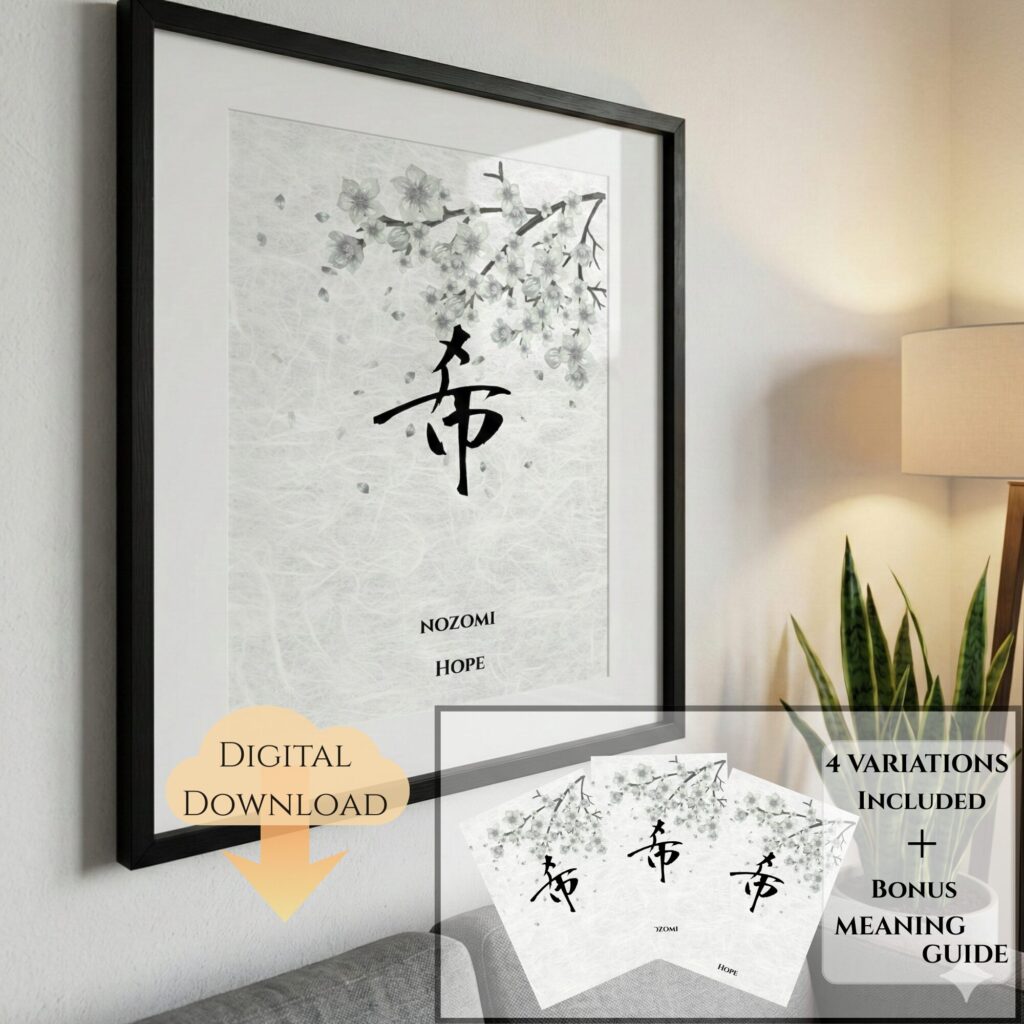
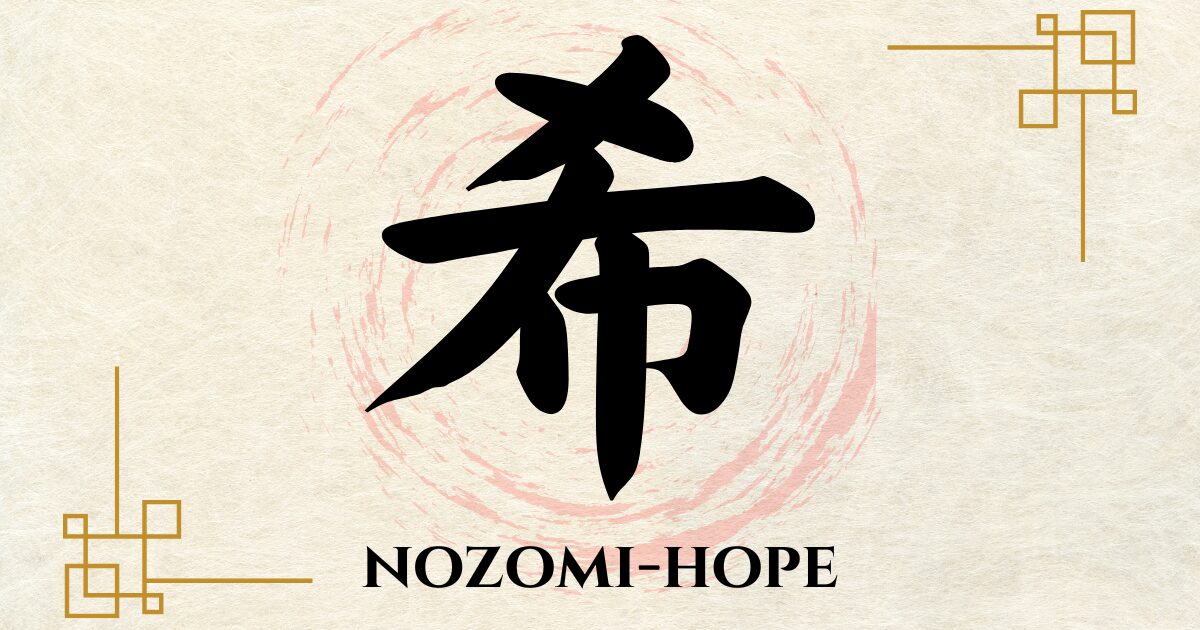
When I sat down to write this specific 【希】, I didn’t want it to look weak. People think “hope” is soft, like a cloud. I disagree.
I painted this with a strong, upward sweep on the final strokes. I used a “dry brush” technique (kasure) to show texture—to represent the struggle. Hope isn’t easy; it’s something you have to snatch out of the air. The balance of the “X” on top is crucial—it acts like a target, pinpointing exactly what you are aiming for in the future.
This isn’t just ink on paper; it’s a prayer manifested in black and white.
Get This Art
Do you need a daily reminder to keep grinding, keep leveling up, and keep looking forward?
I’ve turned this hand-written calligraphy into a high-quality digital download. It looks absolutely sick as a smartphone wallpaper or framed on your wall above your PC setup.
Don’t let the despair win. Equip the “Hope” Kanji today.
👉 [Grab the 【希】 Digital Art on my Etsy Shop Here]
https://www.etsy.com/listing/4353008190/nozomi-hope-kanji-art-print-japanese
(Stay geeky, stay hopeful!)

コメント